What the BOJ's 0.75% Hike Really Means for Home Loans in 2026 — and How to Prepare
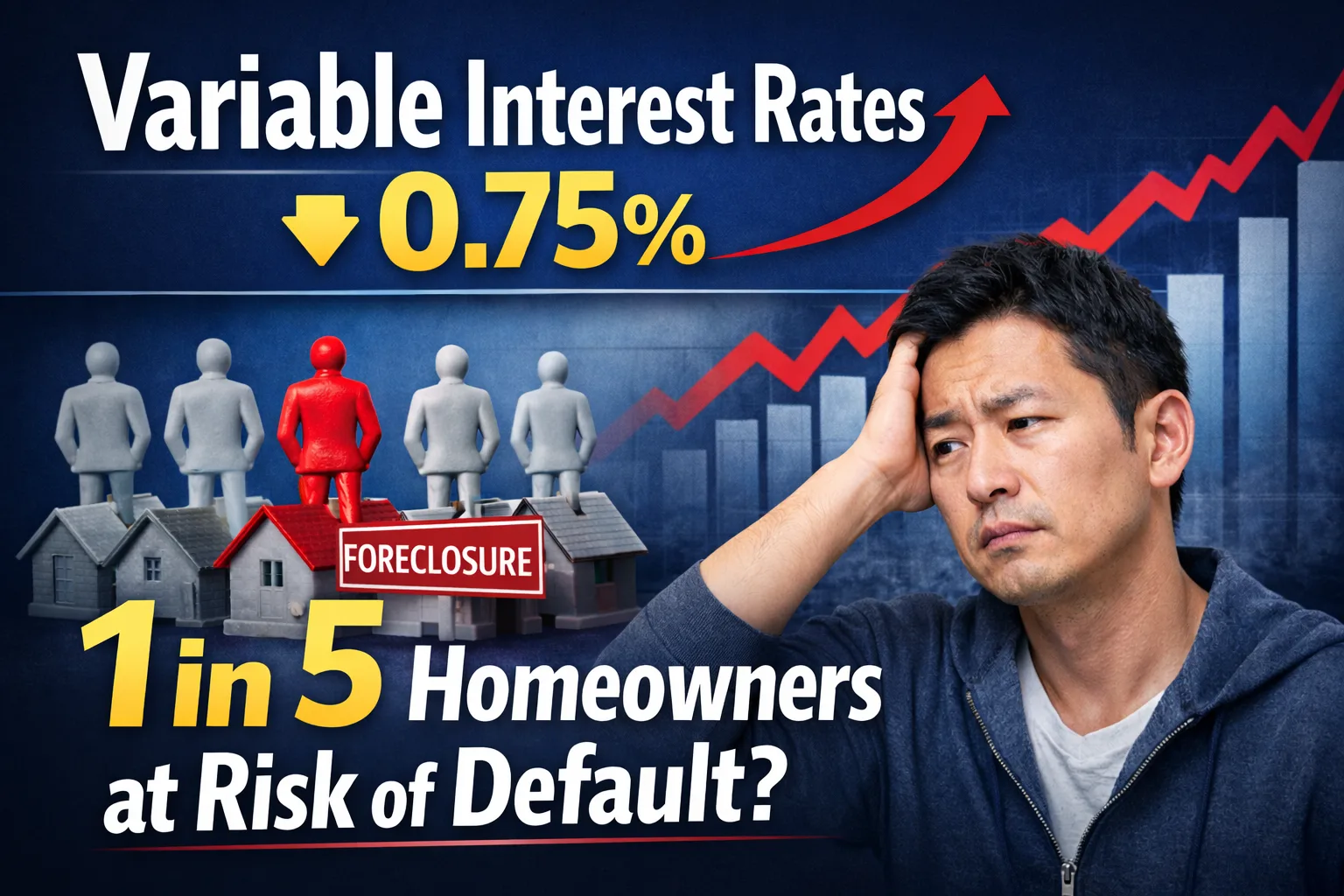
This rate hike won't hurt today — but it will matter tomorrow
On December 19, 2025, the Bank of Japan raised its policy interest rate from 0.5% to 0.75%, the highest level in roughly 30 years. The move was widely expected. Markets barely reacted. Nothing dramatic happened the next morning.
But for homeowners — and anyone planning to buy property in Japan — this decision is far more important than it looks.
This single hike is not aggressive, but it is symbolic. It confirms that Japan is continuing its gradual exit from ultra-loose monetary policy, even while emphasizing caution and flexibility. The key message is not that rates are suddenly high. The message is that rates are no longer anchored near zero.
In some ways, this moment feels familiar. During the COVID period, I remember having the same conversation repeatedly with friends who were buying homes. My view was simple: if you had to borrow, a fixed-rate loan still made sense. Fixed rates were historically low, and the risk was asymmetric — rates had far more room to rise than to fall. Most people strongly disagreed. The common belief was that Japan could never raise rates, that doing so would choke the economy, and that fixed rates were unnecessarily expensive.
In the end, almost everyone chose variable-rate loans. Even those who initially selected fixed later switched to variable, often encouraged by banks actively promoting these switches to reduce their own risk. As far as I know, only one person stayed with a fixed-rate loan all the way through — an exception rather than the rule.
At the time, this felt like a difference in opinion. In hindsight, it was really a difference in assumptions — specifically, the assumption that Japan would remain in a zero-rate world indefinitely.
The real impact of this shift will not arrive overnight. It will come slowly, with a delay, and mostly through housing loans. That is exactly why many people underestimate it.
This article breaks down what has changed beneath the surface, how interest rates have been moving overall, when home loans will actually be affected, what 2026 is likely to look like, and how to think more clearly about decisions from here.
A quick note before going further
I want to be clear: I am not a real estate or mortgage expert, and this article is not financial advice. I'm learning closely from experts, following policy discussions and real data, and writing to reflect my own thinking and the concerns I hear from many people around me. The purpose here is not to tell anyone what to do, but to help frame better questions in a changing environment.
How interest rates are actually moving in Japan
Japan's interest rate environment is changing on two levels.
First, short-term rates — represented by the BOJ policy rate — have begun rising step by step after decades near zero. Even at 0.75%, rates are still low by global standards, but psychologically and structurally, this is a major shift for Japan.
Second, long-term rates have already adjusted. The 10-year government bond yield has moved close to 2%, which directly influences fixed mortgage pricing and long-term borrowing costs.
This means that even before households feel changes in their monthly payments, the pricing logic of loans has already shifted.
How this affects home loans — and from when
Variable-rate mortgages: delayed but unavoidable
Variable mortgage rates in Japan do not change immediately after a BOJ decision. They are linked through banks' short-term prime rates and are usually reviewed twice a year, most commonly in April and October.
This means the December 2025 hike is likely to start showing up in variable mortgage payments around April 2026, depending on the bank and contract.
In practical terms:
- A 0.25% increase typically means an additional ¥3,000–¥7,000 per month
- Larger loans feel this more quickly
- The increases are small individually, but cumulative over time
Fixed-rate mortgages: already reflected
Fixed mortgage rates are driven mainly by long-term bond yields, not policy announcements themselves. Because long-term yields have already risen, fixed mortgage rates adjusted earlier. Existing fixed-rate borrowers are unaffected; new borrowers face higher pricing.
What 2026 is likely to look like
2026 is shaping up to be a normalization year, not a crisis year.
If inflation remains moderate and no major external shock occurs:
- The BOJ may raise rates once or twice more
- The policy rate could approach 1.0–1.25%
- Variable mortgage rates may gradually move toward 1.0–1.5%
Households should realistically stress-test their finances at around 2% variable interest. The danger is not a sudden spike — it's several small increases stacking up over time.
What the data tells us about real household risk
According to the 2025 Housing Loan User Survey by the Japan Housing Finance Agency, which analyzed nearly 1,400 recent home loan borrowers nationwide, rising interest rates are exposing a fragile reality beneath the surface.
When asked how they would respond if monthly mortgage payments increased by ¥10,000, 19.2% — nearly one out of five borrowers — answered that they "don't know" or "cannot judge" what they would do. This does not mean immediate default, but it clearly indicates a lack of financial buffer or concrete planning, which represents a potential pathway to mortgage distress if increases continue.
The picture becomes much more severe at higher levels. When the hypothetical increase reaches ¥50,000 per month, almost 90% of borrowers say they could no longer continue under current conditions, facing uncertainty or being forced into corrective actions such as refinancing or asset sales. While this is not an instant default scenario, it shows that most households lack resilience at that level, meaning the potential risk of home loan default becomes widespread if such increases were sustained.
In short:
- ¥10,000 exposes fragility (1 in 5 households)
- ¥50,000 exposes systemic stress (nearly everyone)
This is not about panic — it's about margin.
Choosing a home loan today: variable vs fixed
A variable-rate loan can make sense if:
- your household has meaningful financial buffer
- you can absorb gradual increases without stress
- you understand interest-rate risk and can remain calm
A fixed-rate loan can make sense if:
- predictability matters more than short-term savings
- payment increases would strain your lifestyle
- you prefer not to manage macroeconomic risk personally
There is no universally correct choice. The mistake is assuming one environment lasts forever.
About loan length: 35 years vs 50 years
Longer loan terms reduce monthly payments, but they significantly increase total interest and long-term risk. I do not recommend 50-year home loans, even for people in their 20s. A 50-year mortgage locks you into one financial decision for half a century and limits flexibility during the most dynamic decades of life. Even a 35-year loan is already long — but it offers a more reasonable balance between affordability and freedom.
If a property is only affordable with a 50-year loan, that is often a signal about price, not opportunity.
Final takeaway
Japan is not heading toward a sudden mortgage crisis. But it is leaving behind an era where interest rates could be ignored.
The real risk is not dramatic default — it is long-term loss of flexibility, built quietly through assumptions that no longer hold. Designing your housing decision to survive higher rates — not just today's low ones — is what separates resilience from regret.
That is the real meaning of the BOJ's 0.75% shift.