Is Japan Really Anti-Immigration? The Truth Behind the Headlines
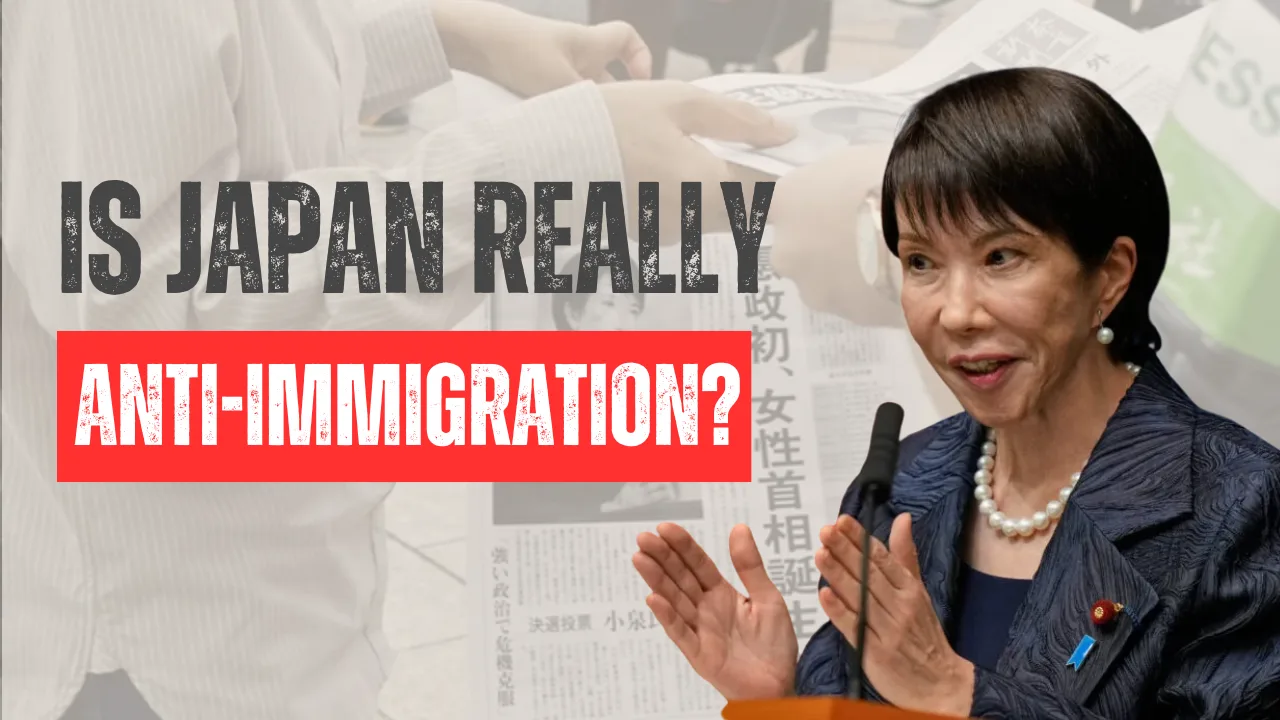
For years, global media has portrayed Japan as xenophobic, anti-foreigner, and hostile to immigration. Viral videos show Tokyo street protests, politicians pushing "Japan-first" agendas, and sensational claims that Japan's new female Prime Minister is launching a crackdown on foreigners.
But how much of this reflects reality—and how much is misunderstanding?
Japan is not simply "anti-immigration." What the country is experiencing today is a collision of historical identity, demographic crisis, overtourism, loophole abuse, and political opportunism—all converging at the same time.
This is the summarized story.
1. Japan's Tension: Needing Foreign Workers While Resisting Rapid Change
A case from Hokkaido illustrates the paradox.
In 2025, residents of Kutchan—an internationally famous ski town—launched a petition against a dormitory for 1,200 foreign seasonal workers. Locals worried about noise, safety, and "becoming foreigners in their own town." Yet the same town is struggling with aging population, labor shortages, and shops on the brink of closing.
Japan needs foreign workers. But parts of Japan emotionally resist the pace of change.
2. Why Japan Became So Closed: 400 Years of History in One Story
Japan's "closed country" mindset isn't cultural—it's historical.
Between 1543 and 1639, Japan experienced:
- Arrival of Europeans
- Rapid spread of Christianity
- Wars, famine, violent rebellion
- A brutal crackdown that climaxed with the 1638 Shimabara Rebellion, where 37,000 rebels were killed
- The Sakoku policy: 214 years of total national isolation
This 400-year inheritance explains why Japan remains 97% ethnically Japanese today and why national identity remains fiercely protected.
You cannot understand modern immigration debates without this context.
3. Japan's Illegal Immigration Problem Is Tiny—But the Crackdown Is Huge
Japan's "illegal immigration crisis" is often exaggerated.
- Illegal overstayers: 71,000
- Percentage of population: 0.058%
- Compare with the US (~4.6%)
Most overstayers originally entered legally—tourists, interns, or students who stayed past visa dates.
Yet Japan elected a hardline Prime Minister, Sanae Takaichi, who won massive support (78%) by promising a strict crackdown on both illegal and legal immigration loopholes.
Why target legal residents? Because of systematic non-payment of pension and health contributions among some part-time foreign workers. Many workers misunderstand bills, move frequently, or intentionally skip payments while sending cash home.
This created resentment among ordinary Japanese taxpayers—and the government capitalized on it.
The new policy starting 2027: No pension/insurance payment → no visa renewal → possible permanent residency revocation.
4. The Shell Company Scandal: When Visas Become Real Estate Tools
A second major loophole fueled anti-foreigner sentiment: the Business Manager Visa.
For years, foreigners—especially from China—could:
- Register a company with 5 million yen capital
- Claim a business plan
- Acquire a long-term visa
- Buy real estate freely
- Withdraw profits offshore with minimal local contribution
Investigators found:
- 90% of scrutinized companies had no actual business activity
- Some buildings had 49 foreign "companies" registered on one floor
- Foreign buyers drive up property prices in major districts (20–40% of new condos)
This fueled public anger—especially among young Japanese priced out of their own neighborhoods.
In October 2025, Japan introduced stricter rules:
- Capital requirement raised to 30 million yen
- Japanese language proficiency (N2) required
- Must hire a full-time Japanese employee
- Business plan must be certified
- Master's degree required in the field
An estimated 96% of current business visa holders will no longer qualify.
But this created a new unintended crisis: legitimate foreign founders will find it almost impossible to launch startups in Japan. You can find more details about the Japan Startup Visa in this blog.
5. Japan Actually Wants Immigration—But Only the "Right Kind"
This is where the stereotype breaks down.
Japan is aggressively courting highly skilled global talent:
- AI researchers
- Engineers
- Corporate executives
- PhD holders
Their "Highly Skilled Professional (HSP)" visa is one of the world's fastest tracks:
- 80 points → Permanent residency in 1 year
- 70 points → Permanent residency in 3 years
Visa costs? Around $50–$1,500, far cheaper than the US H-1B process.
Japan wants global talent. But poor policy execution ends up punishing founders and rewarding corporate hires.
6. Overtourism: The Real Source of Anti-Foreigner Sentiment
Japan is not being flooded with immigrants—it's being flooded with tourists.
- 30+ million tourists visited between Jan–Sept 2025
- Expected 40 million+ by year-end
- Spending: $32B+
- Tokyo, Kyoto, Osaka overwhelmed
Locals describe:
- Packed trains
- Noise
- Litter
- People sitting on station floors
- A breakdown of the etiquette Japan is globally admired for
Tourists are not intentionally disrespectful—they simply don't understand Japanese norms. But for locals, the daily friction is real.
And here's the critical point:
Most Japanese cannot distinguish between tourists, workers, immigrants, or business owners.
All foreigners blend into one category…and political actors exploit that confusion.
7. Politics Turned "Tourist Fatigue" Into "Anti-Immigration" Messaging
Japan's far-right Sanseito Party reframed public frustration into:
- "Protect Japanese identity"
- "Zero illegal immigration"
- "Stop foreign crime"
- "Fight globalism"
This pressured the ruling LDP to adopt similar rhetoric to protect their voter base.
As a result, Japan looks "anti-immigration" from the outside—even though many Japanese voters don't follow politics at all. Turnout is low. Most people simply want quieter streets and stable communities.
8. So Is Japan Anti-Immigration? The Real Answer
No—but Japan is protective. Japan is cautious. And Japan values order, stability, and identity above all else.
The real picture:
Japan Is "Closed" When:
- Visas are abused
- Taxes aren't paid
- Real estate speculation hurts locals
- Social norms are disrupted
- Policy loopholes enable exploitation
Japan Is "Open" When:
- You are a highly skilled worker
- You pay taxes and insurance
- You contribute to society
- You integrate into Japanese norms
- You help solve labor shortages
- You bring real economic value
Japan's challenge isn't foreigners.
Japan's challenge is managing change without losing what makes Japan…Japan.
Conclusion: What Japan Needs Now
Japan is not xenophobic. Japanese citizens are not anti-foreigner. What you're seeing is:
- A historically isolated nation
- Facing demographic collapse
- Flooded by tourists
- Strained by loophole abuse
- Confused by unclear policy
- And caught between globalization and national identity
Japan is trying—sometimes clumsily—to open doors selectively while preserving social harmony.
The question is whether the implementation will mature fast enough to attract the global talent Japan desperately needs.
Until then, the debate continues.